Annual Leaders Forum

Leaders Forum 2025

SECCCA Photo gallery

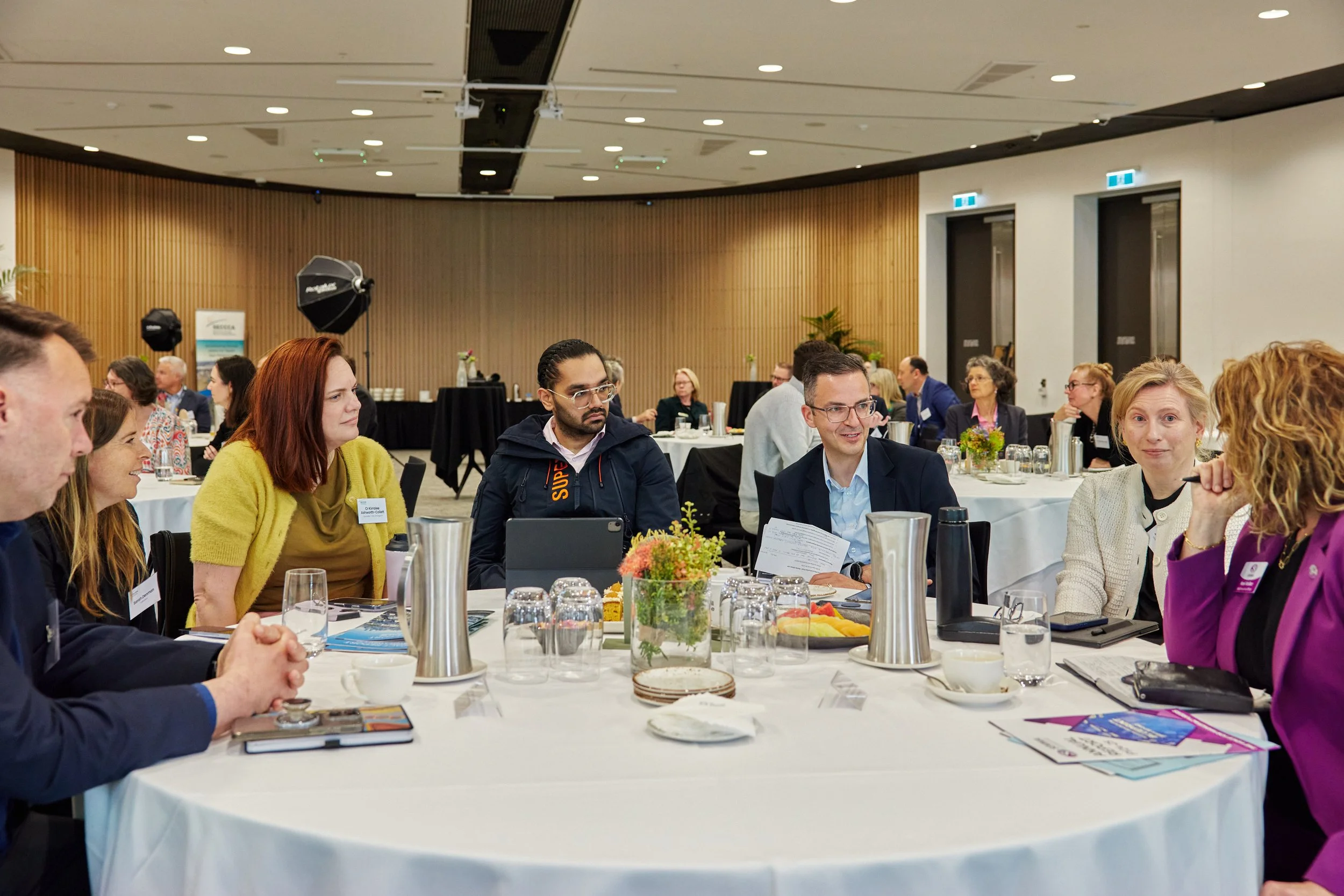
More than 70 leaders from across the South East Councils Climate Change Alliance (SECCCA) participated in the 2025 Leaders Forum on 12 November at Bunjil Place exploring the important theme — Future Proofed: Leadership in a Changing Climate.

With councils facing escalating physical impact and risk from climate hazards, and a constrained financial environment, the forum explored some of the challenges we face in managing our public assets and considered different approaches to adaptation and building the resilience within our infrastructure to withstand the extreme weather events and other climate hazards that are becoming more frequent.

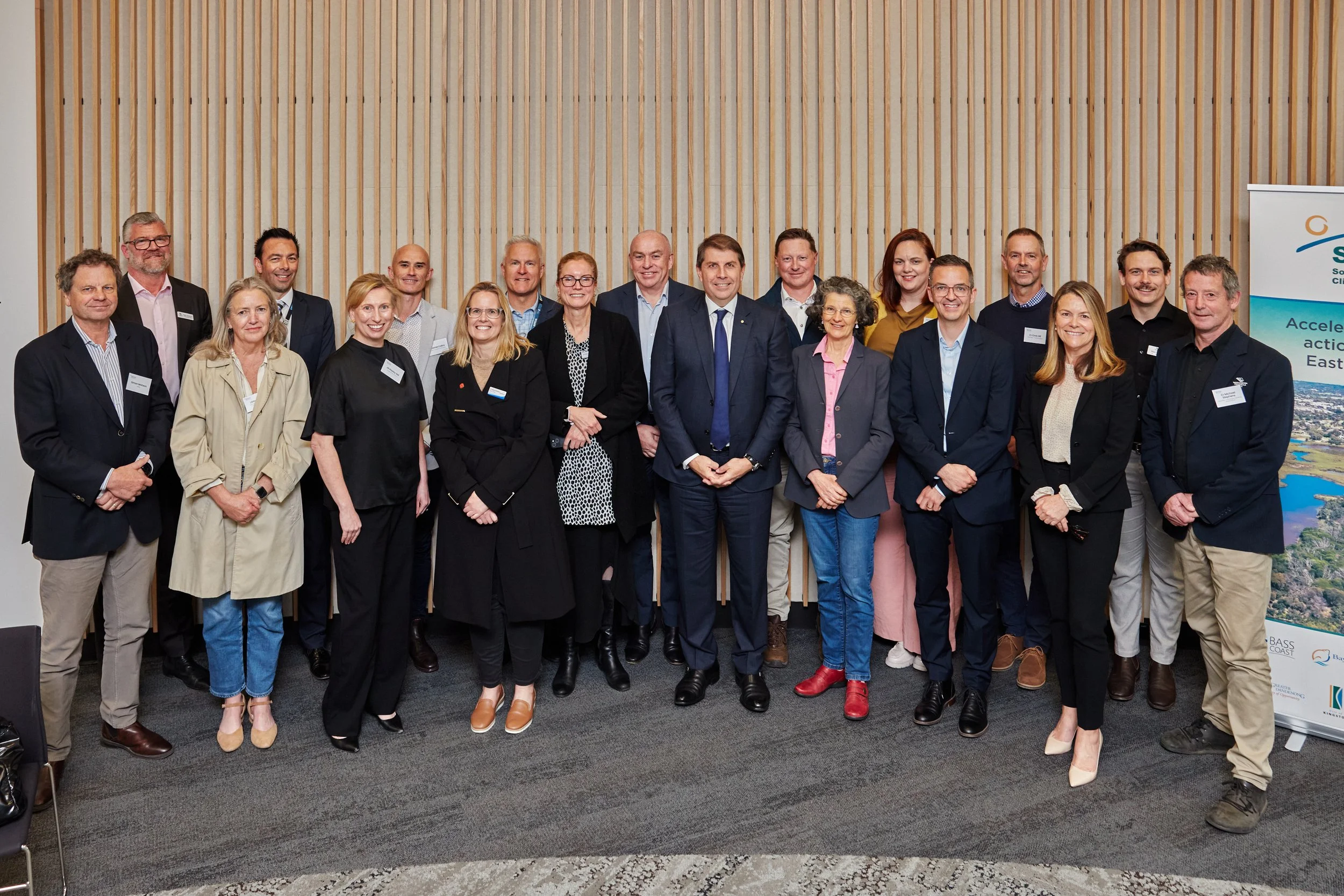
Building on the success of last year’s forum, with its open discussion and exchange of ideas on climate adaptation and resilience, the event attracted many councillors from our Member Councils as well as federal representative Hon Mark Dreyfus KC, MP, Member for Isaacs.

Members and stakeholders came together to discuss the difficult challenges we face and learn more about the work already being undertaken. Distinguished keynote speaker Martijn Wilder AM, Founder, Pollination and Chair, National Reconstruction Fund provided a global perspective, reinforcing the importance of planning and setting the stage for an engaging panel discussion. We are grateful to the contribution of the panel who shared insights from their different perspectives and spoke candidly of the challenges we face but also of the opportunities this moment presents. The conversation included Jill Riseley AM, Deputy CEO, Infrastructure Victoria and Mark Stoermer CEO, Mornington Peninsula Shire who joined Martijn Wilder AM.

Representing the many mayors and councillors who attended the forum, Mayor of Bass Coast, Cr Rochelle Halstead provided the welcome and Mayor of City of Casey, Cr Stefan Koomen provided the event summary and closing remarks.

As well as bringing our leaders together, the forum provided an opportunity for a pulse check in terms of where Councils are on their climate risk journeys, and we will be drawing on the insights from the Climate Risk – Leaders Insight Survey in 2026.

We will continue to monitor the pulse, and we look forward to working with the SECCCA community in the future to continue those discussions.

Key insights from the forum include:

Australia’s global leadership is strengthening

Australia’s climate credentials are gaining international attention. Martijn Wilder AM highlighted that the combination of the National Climate Risk Assessment, the 2035 emissions target, and forthcoming mandatory climate disclosures positions Australia as a serious global leader. He emphasised the need to move adaptation efforts from reactive responses to proactive, preventive action.

Planning underpins climate resilience in a volatile world

Effective planning is becoming non-negotiable. Mark Stoermer outlined how their Climate Resilience Plan is embedding a climate lens into new infrastructure, helping councils make more strategic, prioritised decisions in the face of increasing uncertainty.

Strong climate data exists – but policy and processes haven’t caught up

Australia has exceptionally strong climate and hazard data, yet this strength is not consistently reflected in policy, modelling, or approval pathways. Jill Riseley AM noted the disconnect between what we know and how decisions are made, underscoring the need for better alignment across systems. More work is also needed to clarify where responsibility for adaptation sits and agree an approach.

Mindset shifts and education are essential

Data alone doesn’t deliver resilience. Participants emphasised that data quality, usability, and comprehension remain core challenges, and Martijn said we need a mindset shift – if you’re constantly focusing on the past (and being reactive), it’s very hard to turn your mind to the future. People accessing data need ongoing education to interpret information effectively, and councils, boards and other leaders need continued education to help them make informed climate-aligned decisions.

Investors and insurers are reading climate risk differently

Insurers are already adjusting their exposure based on climate risk, withdrawing from high-risk regions and reshaping market dynamics. Investors, however, are primarily driven by shareholder value and are more focused on how climate risk influences planning approvals, project viability, and future returns. This divergence creates challenges and opportunities for local government planning.

In her opening remarks, Cr Rochelle Halstead highlighted the importance of alliances like SECCCA with a reminder that councils cannot solve these challenges alone. “The weather doesn’t stop at municipal boundaries, and neither should we.”

The forum was also an opportunity to learn about the work SECCCA already has underway, including the Financing Flood Resilient Infrastructure Project (FFRI), which received funding from the Australian Government’s Disaster Ready Fund distributed by NEMA. This is a pioneering piece of work in Australia and will aim to develop innovative finance mechanisms to attract potential investment for resilient infrastructure solutions for high-risk flood zones and reduce stress on rates.

For those who missed the forum or for anyone would like to learn more please contact the SECCCA team at admin@seccca.org.au to continue the conversation.

Click here for past events

Mayors and councillors came together for an open discussion and exchange of ideas on climate adaptation and resilience.